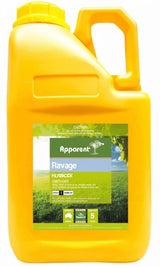
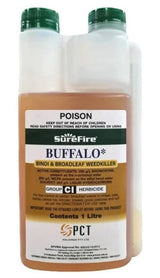
KAMBA M HERBICIDE NUFARM 0160
- Active ingredient
- 80 g/L dicamba + 340 g/L MCPA
- Controls
- Haloxyfop-P-methyl controls a broad range of annual and perennial grass weeds. Key target species include annual ryegrass (Lolium rigidum), wild oats (Avena fatua), ba...
For the control of certain broadleaf weeds in winter cereals, pastures, turf and non-crop areas.
Weeds Controlled in Turf:
Bindi-Eye, Capeweed, Catsear, Chickweed, Clovers, Cotula, Creeping oxalis, Cudweed, Dandelion, Dock, Fleabane, Fumitory, Jo-jo (Onehunga), Lamb’s tongue, Medics, Mustard, Narrow leaf plaintain, Pearlwort, Pennywort, Peppercress, Radish, Scarlet pimpernel, Slender soldier - Spear & Variegated, Thistles, Toad rush, Wild turnip, Wireweed/Hogweed.
For QLD, NSW, TAS, SA & WA Only:
Fat hen, Purple top, Red-Flowered mallow, Stagger weed, Swinecress.
For Best Results When Spraying Kamba M:
Spray your lawn when weeds are young and actively growing.
Do not mow turf for at least 2 days before or after application.
Do not spray within 4 hours of rainfall or general watering.
Do not spray when weeds are wet with dew or rain.
Do not spray if soil fertility is low or if soil is water logged.
Do not spray weeds under stress (heat or water logging etc).
Ensure thorough wetting of all weed foliage.
Do not fertilise turf for 2 weeks after spraying.
Do not allow grazing stock onto sprayed area for 7 days after application.
Keep domestic animals off the treated area until product has dried.
Directions:
Small Turf Areas, Golf Tees & Greens: 100mL in 15L water sprayed evenly over 150 square metres
Bowling Greens 900mL in 200L water sprayed evenly over 1,400 square metres
Large Turf Areas – Fields, Parks & Golf Fairways 6.5L in 250-400L water per hectare (10,000 square metres)
Product Type:
Herbicide
Mode of Action:
Group I Herbicide
Active ingredient(s):
340g/L MCPA present as the dimethylamine salt 80g/l Dicamba present as the dimethylamine salt
Formulation:
Soluble Liquid
Active Ingredient: 80 g/L dicamba + 340 g/L MCPA
Chemical Schedule: S6
APVMA Reg. No: 49906
Also sold as: Verdict, Gallant, Targa
Target Weeds
Haloxyfop-P-methyl controls a broad range of annual and perennial grass weeds. Key target species include annual ryegrass (Lolium rigidum), wild oats (Avena fatua), barley grass (Hordeum leporinum), volunteer cereals (wheat, barley, oats), barnyard grass (Echinochloa crus-galli), liverseed grass (Urochloa panicoides), summer grass (Digitaria sanguinalis), crowsfoot grass (Eleusine indica), couch grass (Cynodon dactylon), paspalum (Paspalum spp.), and windmill grass (Chloris truncata). It is selective to broadleaf crops and does not control broadleaf weeds or sedges. Always refer to the current label for the full list of registered uses and species.
Kamba M Herbicide (Haloxyfop-P-methyl) is a selective post-emergent herbicide applied as a foliar spray for the control of grass weeds in broadleaf crops and pastures. Mix the required amount of product with water in a clean sprayer, filling the tank to approximately half capacity before adding product, then topping up with water while agitating. Apply as a medium to coarse spray using ground or aerial equipment calibrated for uniform coverage.
Apply to actively growing grass weeds at the recommended growth stage — most effective when target weeds are young and actively growing. Avoid application when weeds are under stress from drought, waterlogging, frost, or disease, as this will significantly reduce efficacy. Uptake relies on healthy leaf tissue and active metabolism in the weed.
Do not apply if rainfall is expected within 1–2 hours of application, as this may wash off the product before adequate absorption occurs. Avoid spraying in conditions of high wind that may cause spray drift onto susceptible grass crops or neighbouring properties. Always check the current registered label for crop-specific withholding periods, re-entry intervals, and water rates before use.
This is a Schedule 6 poison — handle with appropriate PPE including chemical-resistant gloves, safety glasses, and protective clothing. Refer to the product label and Safety Data Sheet (SDS) for full handling, first aid, and disposal requirements.
Always read the current registered product label before use. Dose rates and withholding periods on this page are provided as a guide only. The registered label supplied with the product is the legal document and takes precedence. If in doubt, contact TGRM on (07) 5482 1692 or the manufacturer directly.
Tips for Best Results
- Target young, actively growing weeds: Apply when grasses are small and growing vigorously — typically at the 2–4 leaf stage for annuals — for best control. Larger or stressed weeds will be harder to kill and may require higher label rates.
- Add a registered adjuvant: Where label recommendations allow, adding a crop oil concentrate or methylated seed oil can improve leaf uptake and performance, particularly in dry or waxy-leaf conditions common in Queensland summers.
- Resistance management: Annual ryegrass in southern Queensland has shown resistance to Group A (FOP) herbicides including haloxyfop. Rotate modes of action and consider mixing with Group I herbicides where registered. Scout paddocks after application and report any suspected failures to your agronomist.
- Avoid mixing with broadleaf herbicides unless label-approved: Some herbicide mixtures can reduce haloxyfop activity. Check compatibility carefully and mix in the correct order — water first, then haloxyfop, then any adjuvant.
- Store correctly and check shelf life: Store in a cool, dry, well-ventilated location away from direct sunlight, foodstuffs, and ignition sources. As an S6 chemical, keep locked away and out of reach of children and animals. Check the use-by date before application season to ensure product integrity.
Always read the label and follow directions for use. The registered label is the legal document governing use of this product.
Download the Safety Data Sheet for this product:
Download SDS (PDF)Required for safe handling and storage. Keep on-site per WHS regulations.
Common Questions
What weeds does Kamba M control?
Kamba M is registered for control of a wide range of broadleaf weeds in turf, winter cereals, pastures and non-crop areas. These include bindi-eye, capeweed, catsear, chickweed, clovers, dandelion, dock, thistles, and many others. The full list of controlled weeds appears on the product label, and some weeds are only controlled in certain states (QLD, NSW, TAS, SA & WA). Always check the label to confirm your target weed is listed.
What should I do before spraying?
Before spraying Kamba M, avoid mowing turf for at least 2 days beforehand. Do not spray within 4 hours of rainfall or watering, and do not spray when weeds are wet with dew or rain. Weeds should be young, actively growing, and under good soil conditions—avoid spraying if soil fertility is low, waterlogged, or weeds are stressed by heat or water logging. Thorough wetting of all weed foliage is important for best results. Always read the product label for full pre-application guidance.
What should I avoid after spraying?
After spraying, do not mow turf for at least 2 days. Keep domestic animals off the treated area until the product has dried. Do not allow grazing stock onto sprayed areas for 7 days after application. Do not fertilise turf for 2 weeks after spraying. Always refer to the product label for full post-application instructions and safety directions.
What form does Kamba M come in?
Kamba M is supplied as a soluble liquid herbicide. It contains MCPA and dicamba as active ingredients. Before use, always read and follow the registered product label and Safety Data Sheet (SDS) for mixing, application, and safety information. Contact TGRM on (07) 5482 1692 or visit 55 Tozer St, Gympie if you have questions about how to use this product safely.
Do I need professional advice to use Kamba M?
Kamba M is a regulated agricultural chemical, so it is important to read and follow the registered product label carefully. For advice on whether this product is suitable for your situation, the correct application approach, or any safety concerns, contact your local agronomist or veterinarian, or speak with the team at TGRM on (07) 5482 1692.
Do you ship this product Australia-wide?
Yes, this product ships Australia-wide via road courier. It is too large or heavy for Australia Post. Call us on (07) 5482 1692 if you have any questions about delivery to your area.
Mainland Australia only — we cannot deliver this product to Tasmania. It is classified as environmentally hazardous (harmful to aquatic life), which means it cannot be carried by sea or air freight. Tasmania and other offshore destinations can only be reached by a sea or air leg, so we are unable to send it there. It travels by road freight to mainland addresses as normal. Call us on (07) 5482 1692 if you are unsure about your address.
Can you deliver this to Tasmania?
No. This product is environmentally hazardous (harmful to aquatic life) and cannot legally be carried on sea or air freight. Because every route to Tasmania involves a sea or air crossing, we can only deliver it within mainland Australia. If you are in Tasmania, please call us on (07) 5482 1692 and we will help you find an alternative product.
Can I Click & Collect from Gympie?
Yes — Click & Collect is available from our store at 55 Tozer St, Gympie. Open Mon–Fri 8am–5pm and Sat 8am–12pm. Click & Collect is FREE on orders of $175 or more, or a flat $10 on orders under $175. Select Click & Collect at checkout and we will have your order ready.